AI Use-Case Canvas — Document Your AI Use Case in a Structured Way
AI ideas often live only in heads and slide decks — without a shared structure, business, IT and compliance talk past each other. A canvas makes value, data, risks and required components visible to everyone.
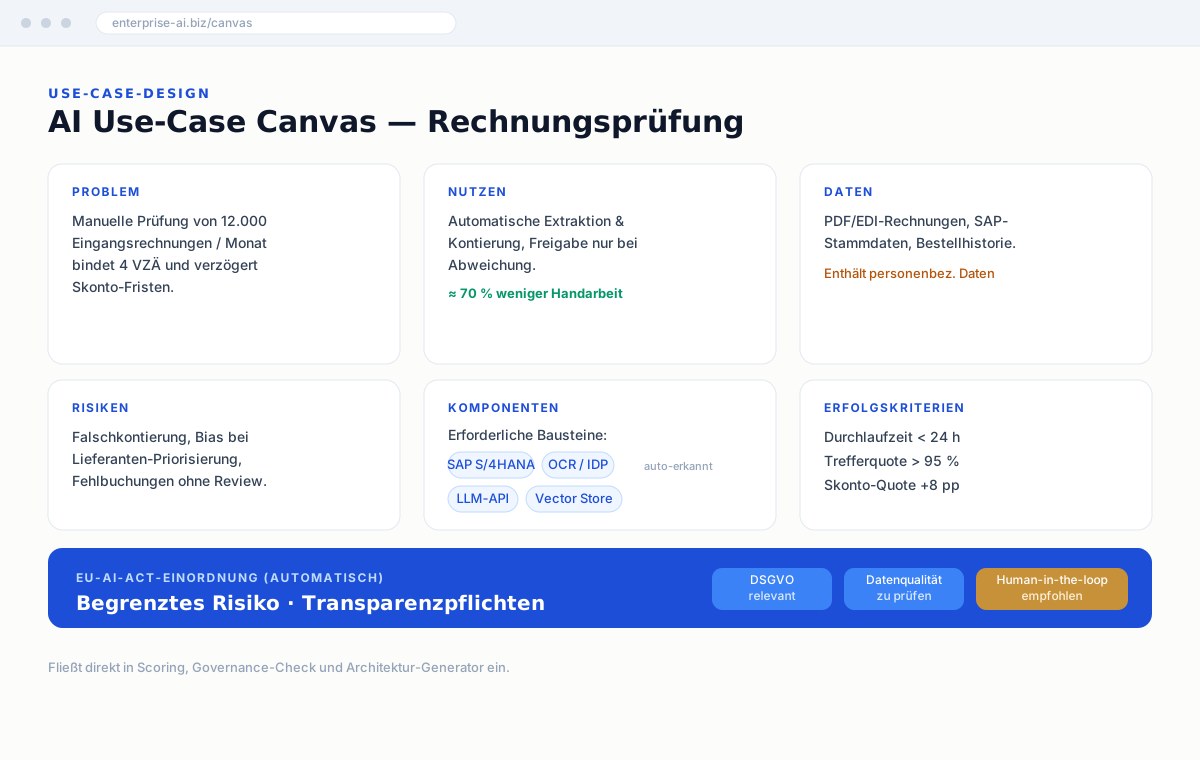
What you get
- A clear template from problem to value, data, risks and success criteria
- Automatic detection of technologies and components from your description
- A first compliance classification under the EU AI Act (7 categories)
- A basis that scoring, governance and architecture reuse directly
Free vs. Pro
- Fill in the full canvas
- Component & compliance detection
- Save canvas (limited per day)
- Save & version your canvas
- PDF export & sharing link
- Manage multiple canvases
Try it now — free
Create a free account and run the tool in minutes. Upgrade to Pro only when you need saving, PDF reports and sharing.
Start for freeFAQ
Why do I need an AI use-case canvas?
To make an AI idea assessable and actionable: the canvas captures value, data, risks and components so that business, IT and compliance work from the same basis.
Does the canvas detect technologies automatically?
Yes. From your description the canvas detects components and vendors and classifies them — this later feeds the architecture generator.
Can I document multiple use cases?
Yes. With a Pro account you manage and compare any number of canvases; for free you fill in one canvas completely.
Related guides
The AI Business Case
An AI business case answers four questions in a fixed order. Only 6% of companies see AI ROI under a year — honest timelines beat enthusiasm.
AI Maturity
Three archetypes summarize AI maturity: Starter, Scaler, Transformer. Plus a 5-level maturity model with measurable criteria instead of gut feeling.