EU AI Act Compliance Tool — Determine Risk Class & Obligations
The EU AI Act brings staggered obligations per risk class. Not knowing whether an application counts as high-risk means either over-planning effort or missing mandatory measures.
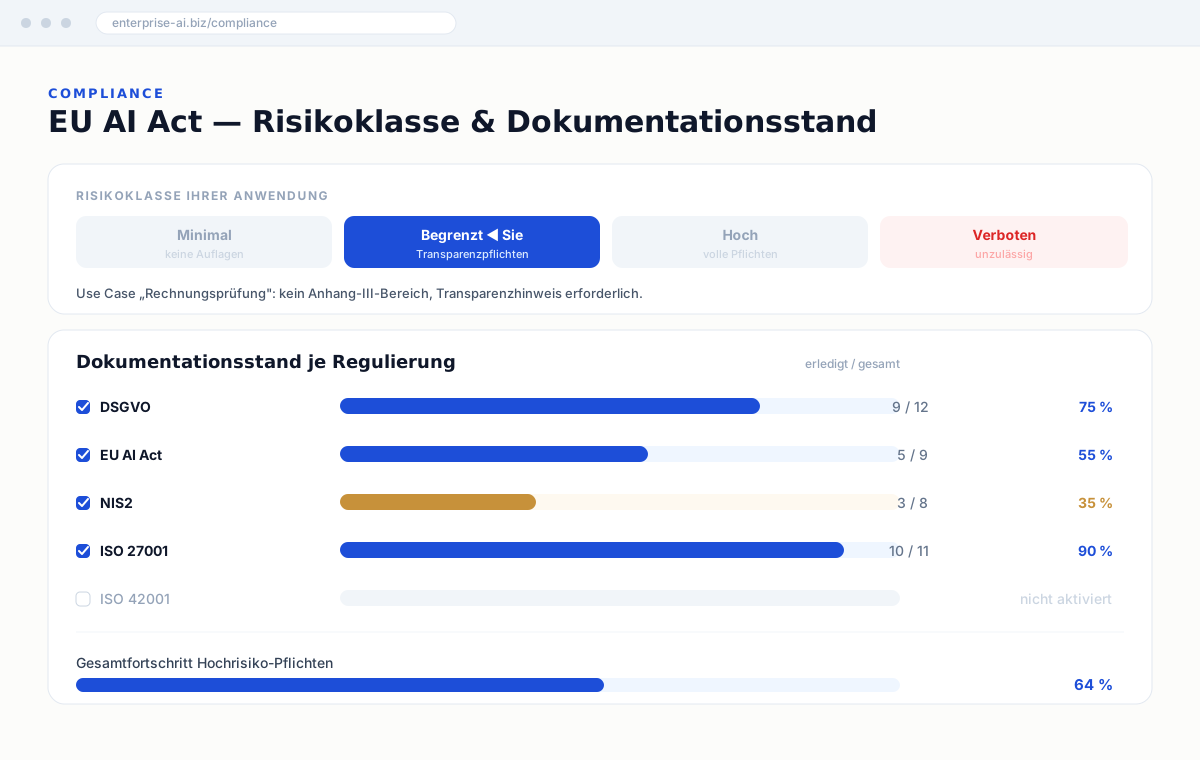
What you get
- Your AI application’s risk class under the EU AI Act (prohibited, high, limited, minimal)
- Activatable regulations: GDPR, EU AI Act, NIS2, ISO 27001 and more
- Checklists per obligation with a visible documentation status per regulation
- A classification that feeds into the governance check and executive summary
Free vs. Pro
- Available in Pro only
- Save checklist progress
- Further regulations (NIS2, ISO …)
- PDF report per regulation
Try it now — free
Create a free account and run the tool in minutes. Upgrade to Pro only when you need saving, PDF reports and sharing.
Start for freeFAQ
Does the tool bindingly determine my EU AI Act class?
It provides a solid classification as orientation for internal decisions. The legally binding assessment remains with your legal function.
Are GDPR and NIS2 covered too?
Yes. GDPR and the EU AI Act are always active; you enable NIS2, ISO 27001 and further regulations as needed — each with its own progress tracking.
Can I see my documentation progress?
Yes. Per activated regulation you see the completed share of obligations — also in the compliance PDF report.
Related guides
EU AI Act for Companies
Four risk classes, staggered deadlines through December 2027, and why AI-powered recruiting is almost always high-risk — the Digital Omnibus status for companies.
Building AI Governance
Solid AI governance runs on three levels: strategic, tactical, operational. A minimal model with 5 roles and 6 core decisions is enough to get started.